Electronic weapon management
Each weapon is released only to the authorised officer, and every removal and return is logged. In a weapon cabinet, a certified safe or your existing armoury.
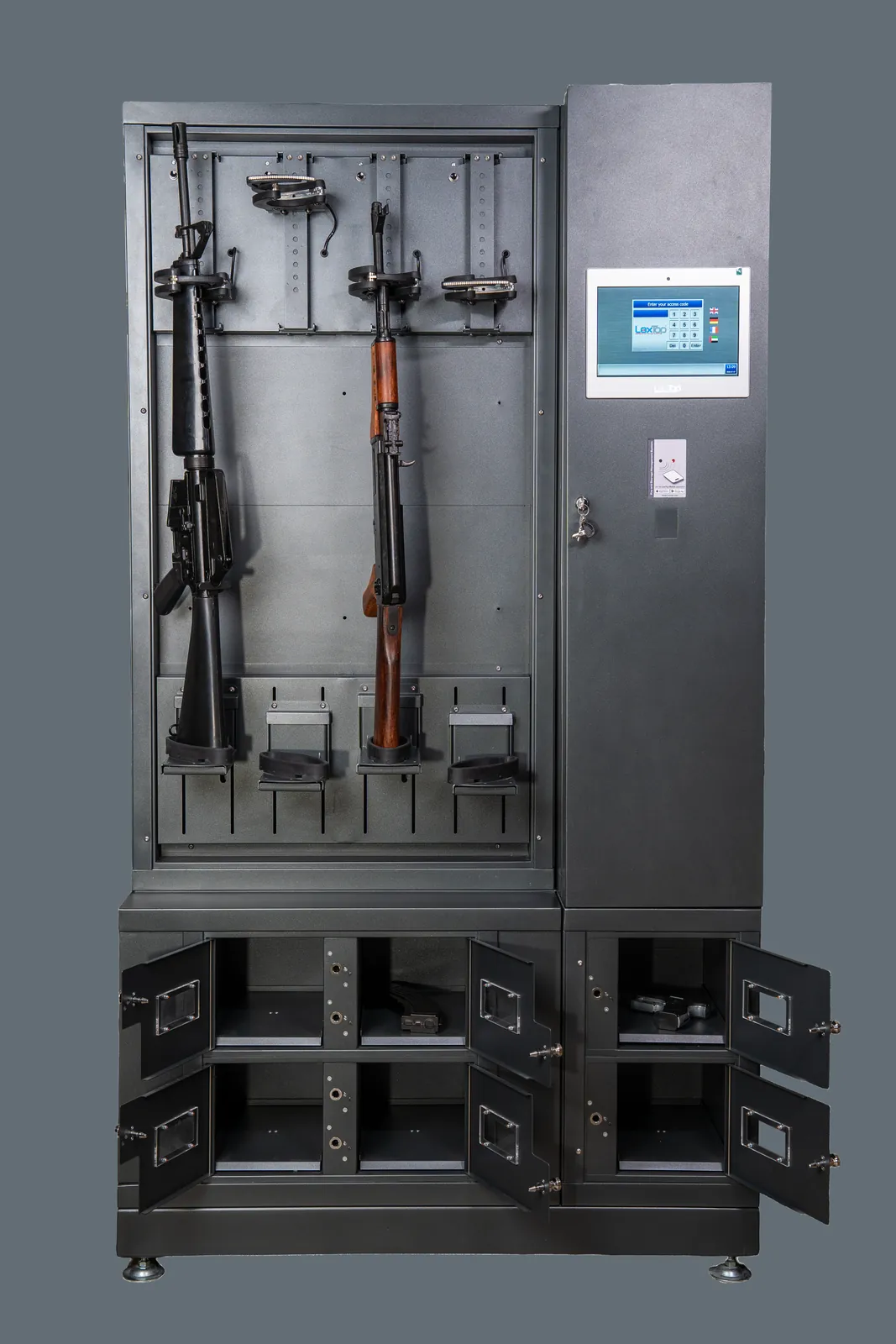
Locked holders or closed compartments
Long and collective weapons stand in a rack with a locked holder per weapon: after identification only the authorised holder is released. Handguns and personal equipment go in closed compartments with their own door; with RFID the system can also recognise the item itself. Both can be combined in one cabinet, and the system can also be installed in an existing armoury.
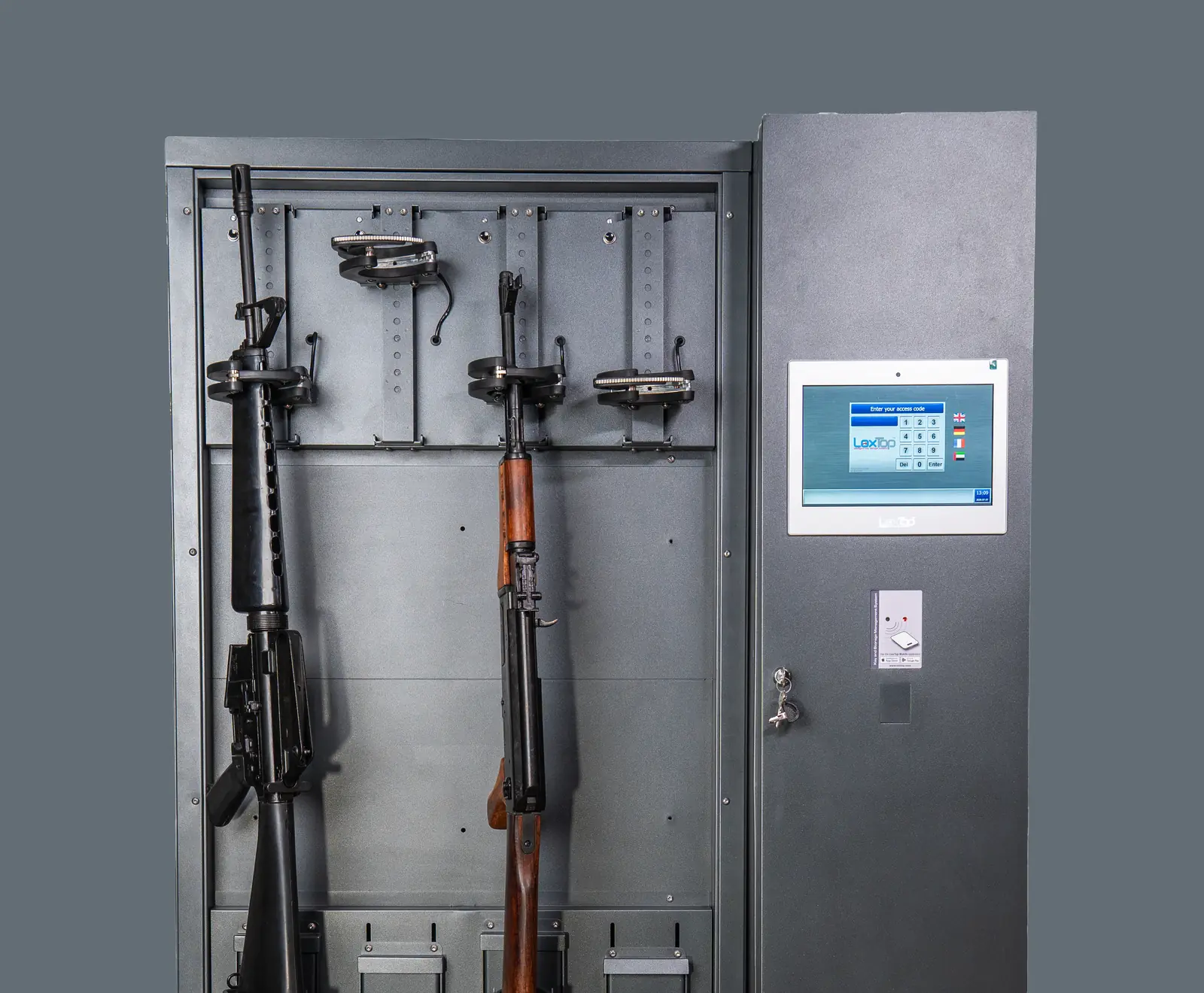
Each holder releases only for the logged-in user; the others stay locked.
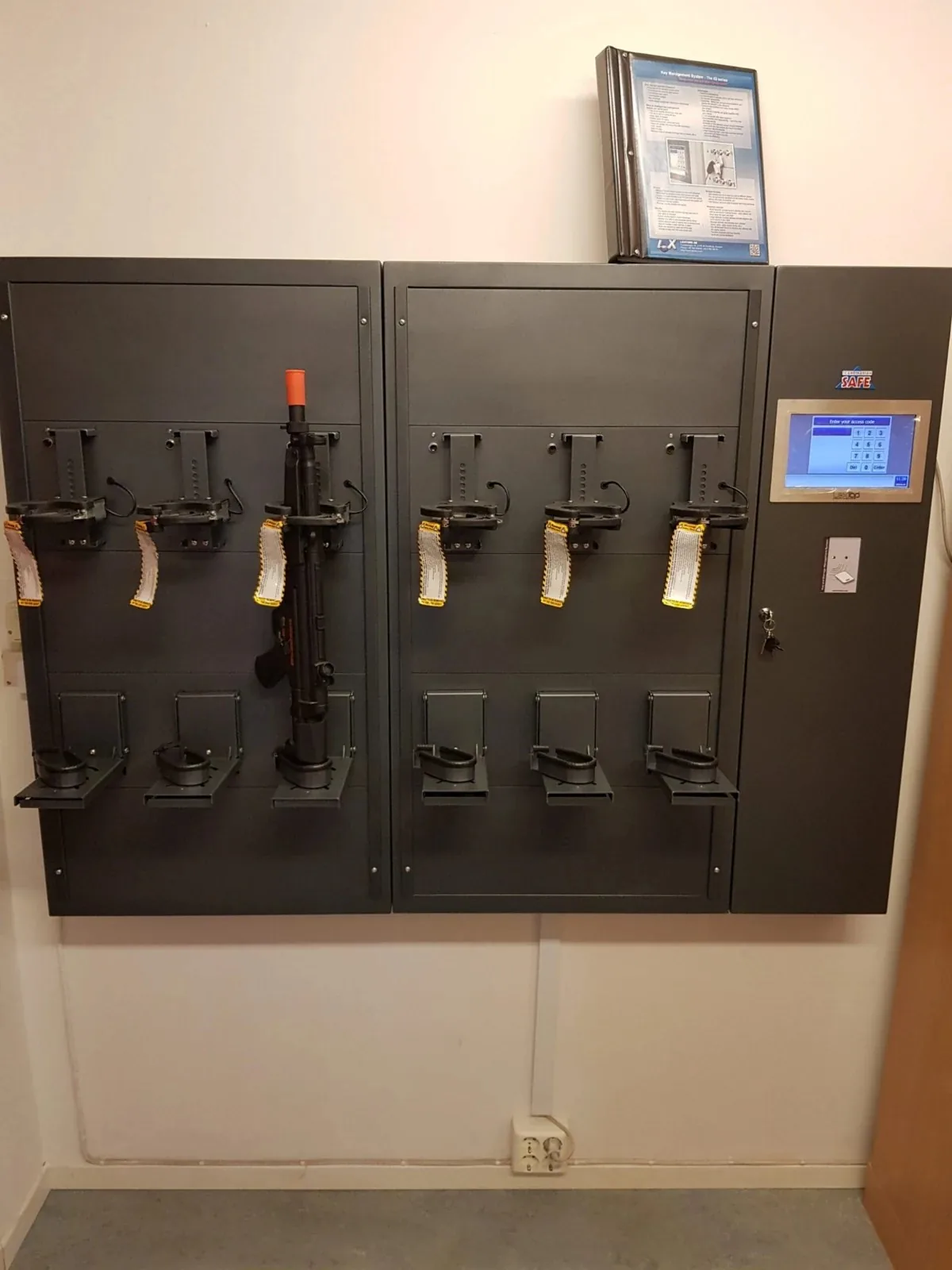
The same locked holders, fitted in a unit's existing armoury.
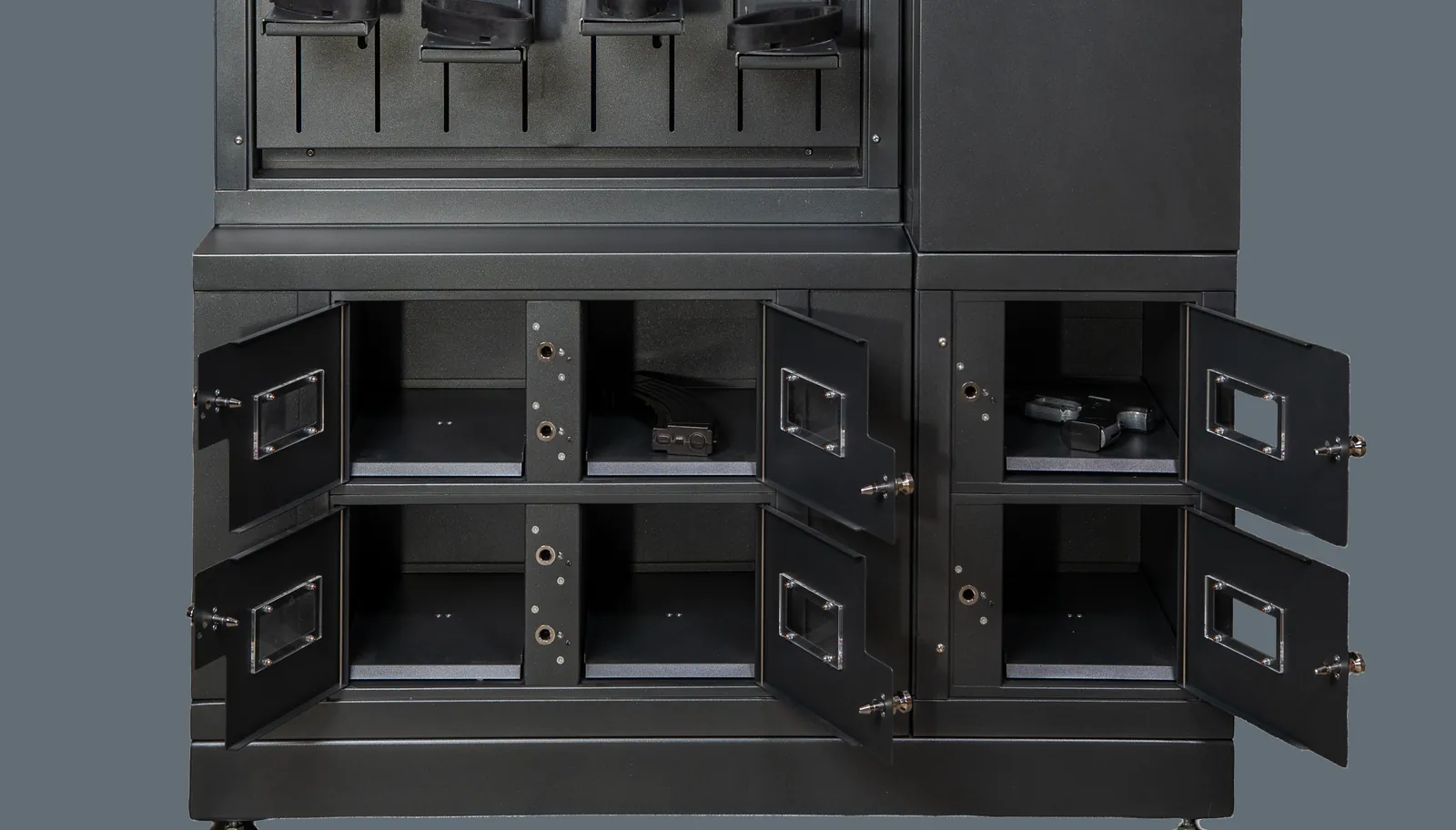
Each service weapon in its own windowed compartment: visible whether it is present without opening.
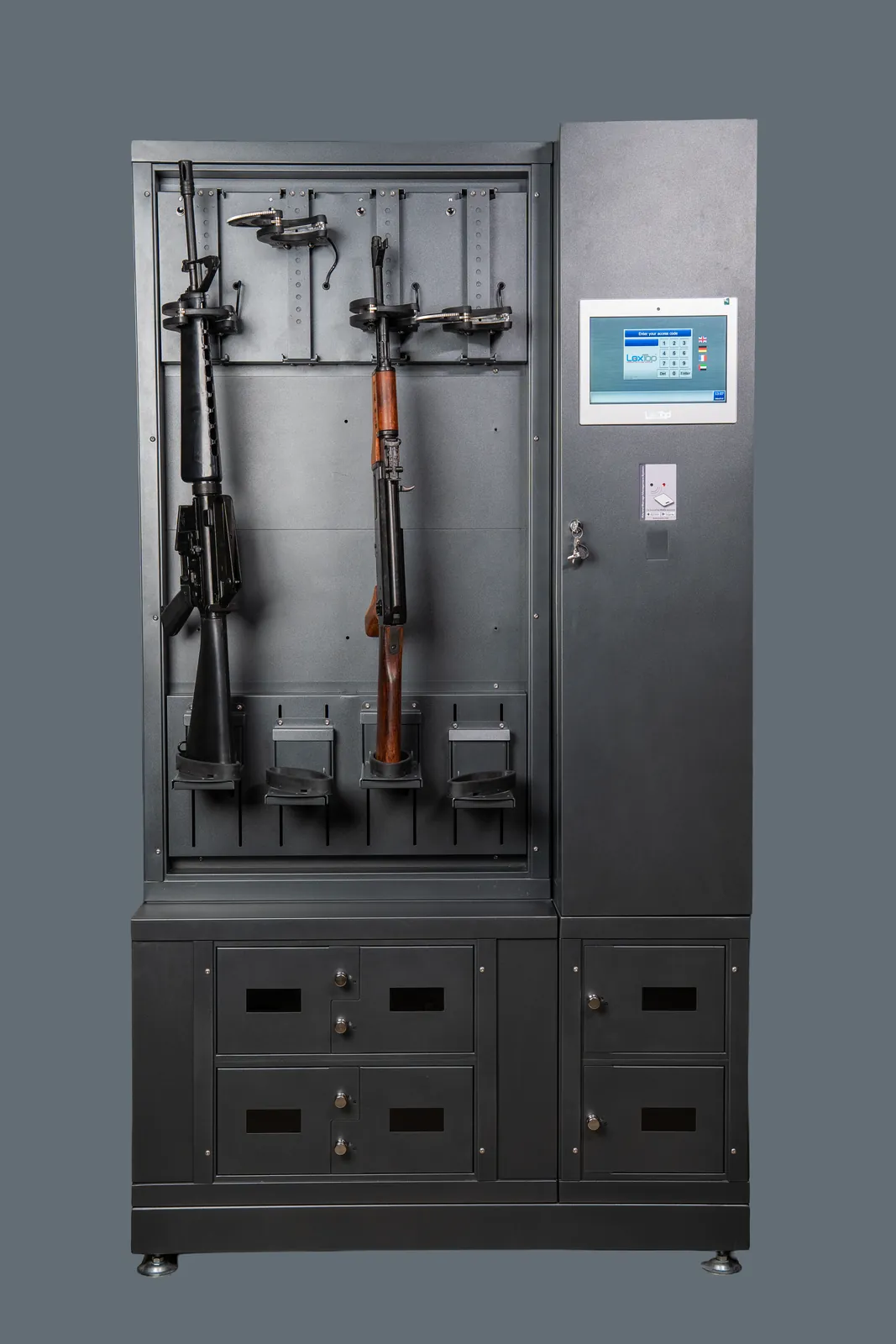
Badge, PIN code or fingerprint at the weapon cabinet's screen, also combined. The existing service badge can often be reused.
How the issue works
- 1Identify
Badge, PIN code or fingerprint at the screen.
- 2Release
Only the authorised holder or compartment is released.
- 3Take
Logged with user, time and position.
- 4Return
Log in again, put the weapon back; the return is recorded.
What the system does
- Rights per weapon position or compartment: per officer, group or service
- Personal service weapon linked to one officer; collective weapons for several users
- Registration of every release and return with user, time and position
- Weight check per compartment: the system flags an empty compartment or an unexpected weight, for example a weapon returned without its magazine. With optional RFID recognition, it also reads the tag of the registered weapon.
- Four-eyes principle: a shared weapon is only released after a second authorised person logs in
- Silent alarm: anyone forced to open uses a derived code; the cabinet opens normally and raises an alarm unnoticed
- Photo at login with the camera in the screen (option)
- Separate compartments for ammunition and equipment
- Web management via the browser on your network; several cabinets linked
- One-off lifetime software licence; 4-year hardware warranty
Technical data
The key data for your technical department or IT. Expand to view it.
Show the technical specifications
| Secure cabinets | EN 14450, S1 or S2 |
|---|---|
| Burglary-resistant safes | EN 1143-1, class 0 up to and including VII |
| Fire resistance | Safes with additional, certified fire resistance |
| Armouries | Weapon racks and closed compartments in an armoury, strongroom or armoured room |
| Existing safe | Often suitable; we assess fitting, cabling, operation and connection |
| Identification | Badge, PIN code, fingerprint or combination |
| Operation | Built-in computer with touchscreen; web management via the network |
| Emergency | Backup battery; emergency release matched to holders, compartments and safe, following your service's procedure |
| Software licence | One-off, lifetime; no annual software licence costs |
| Warranty | 4 years on the hardware |
Weapons, vehicle keys and equipment in one system
Weapon modules work together with key positions and lockers, each with its own rights and logging.
Schematic. Layout, modules and physical security follow your service's requirements.
Solutions for police, customs and defence Built into a safe or armoury
Ordinary gun cabinets and safes
Not every service needs logging per weapon. We also build conventional weapon cabinets and weapon safes: a mechanical lock and a separate key per compartment, or a rifle rack in a certified safe. Fitting electronic management later is possible, if the cabinet and layout allow it.
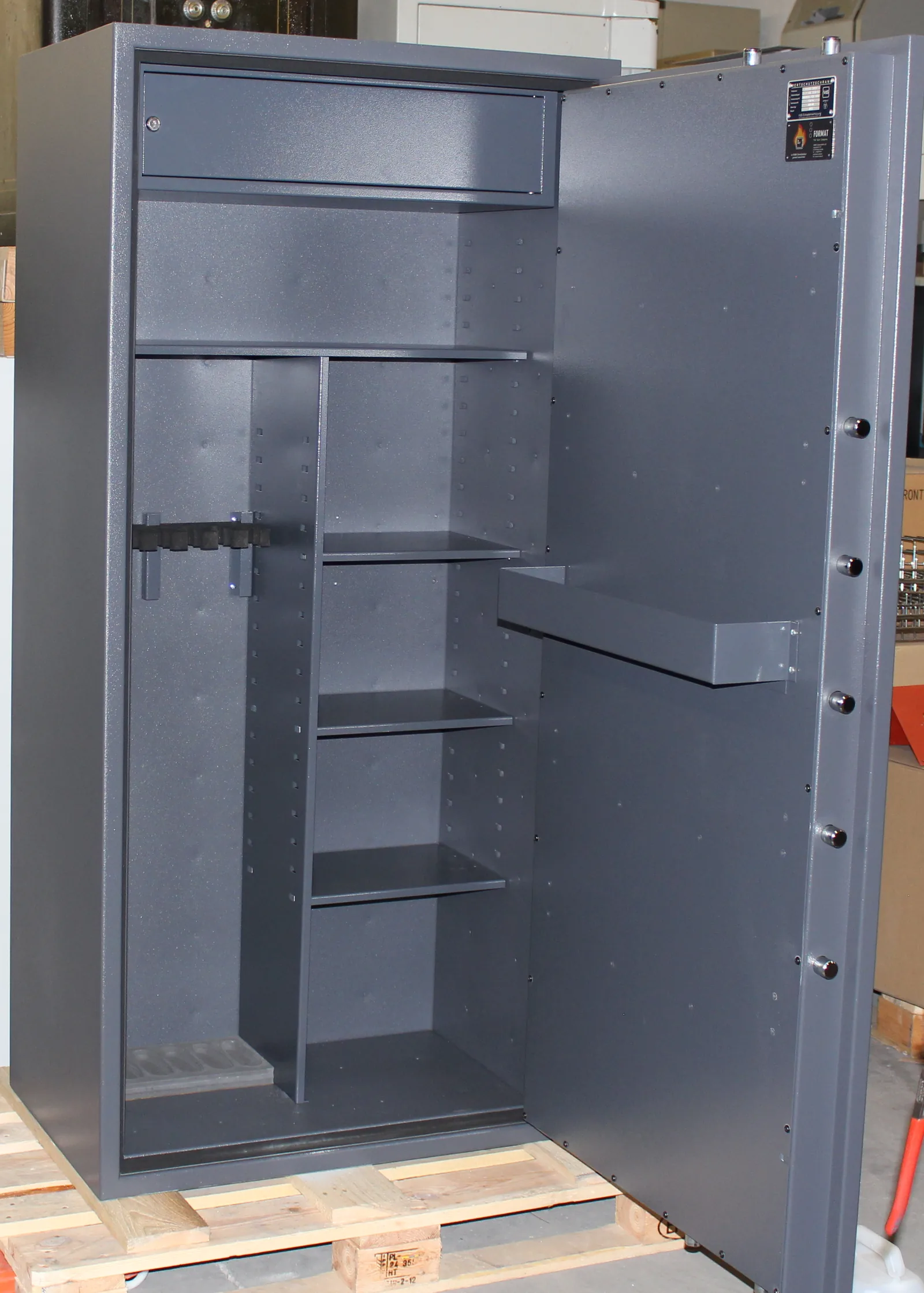
Rifle rack, shelves and a separately locked inner compartment, behind one burglary-resistant safe door.
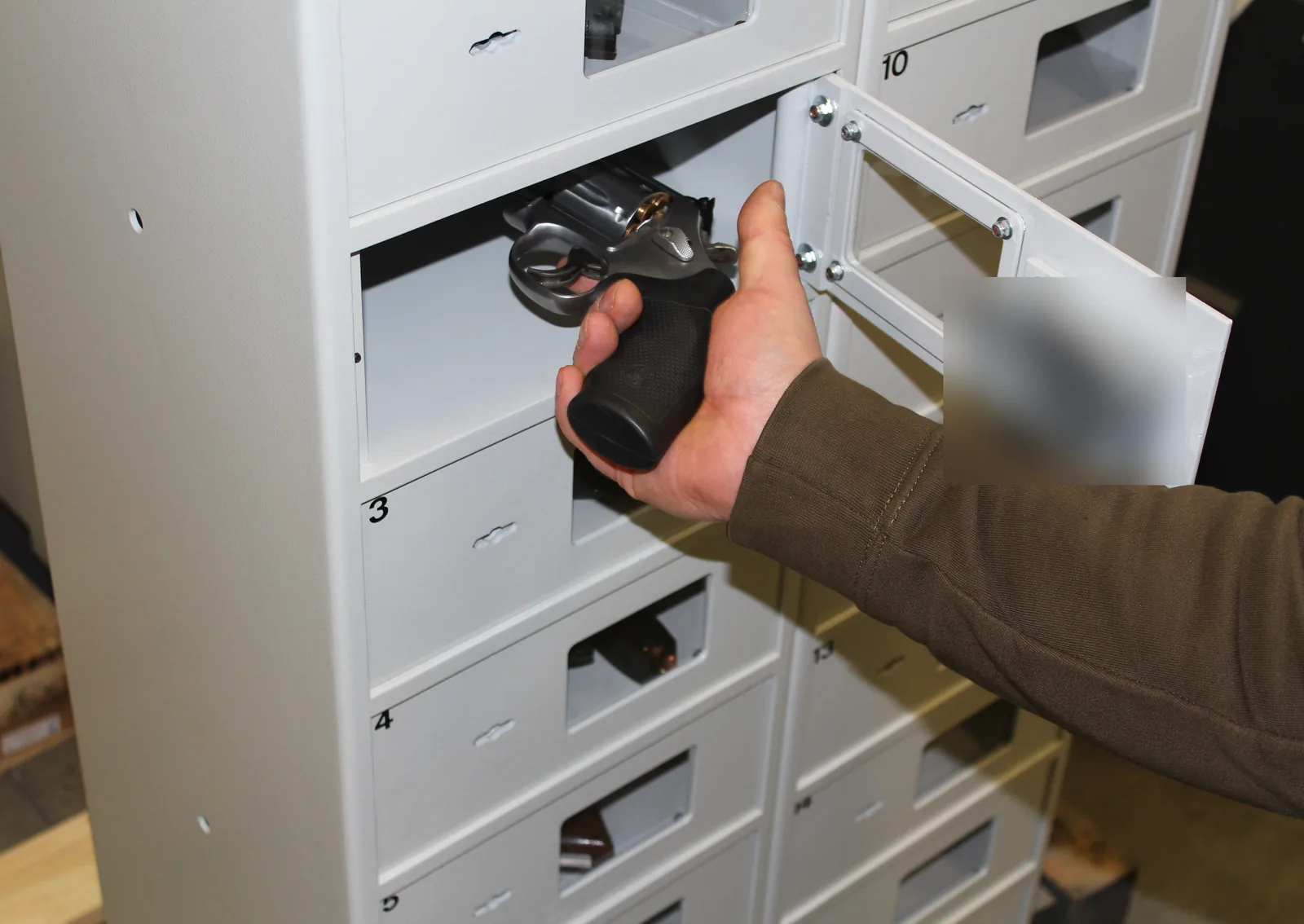
Each officer opens only their compartment; the window shows whether the weapon is present.
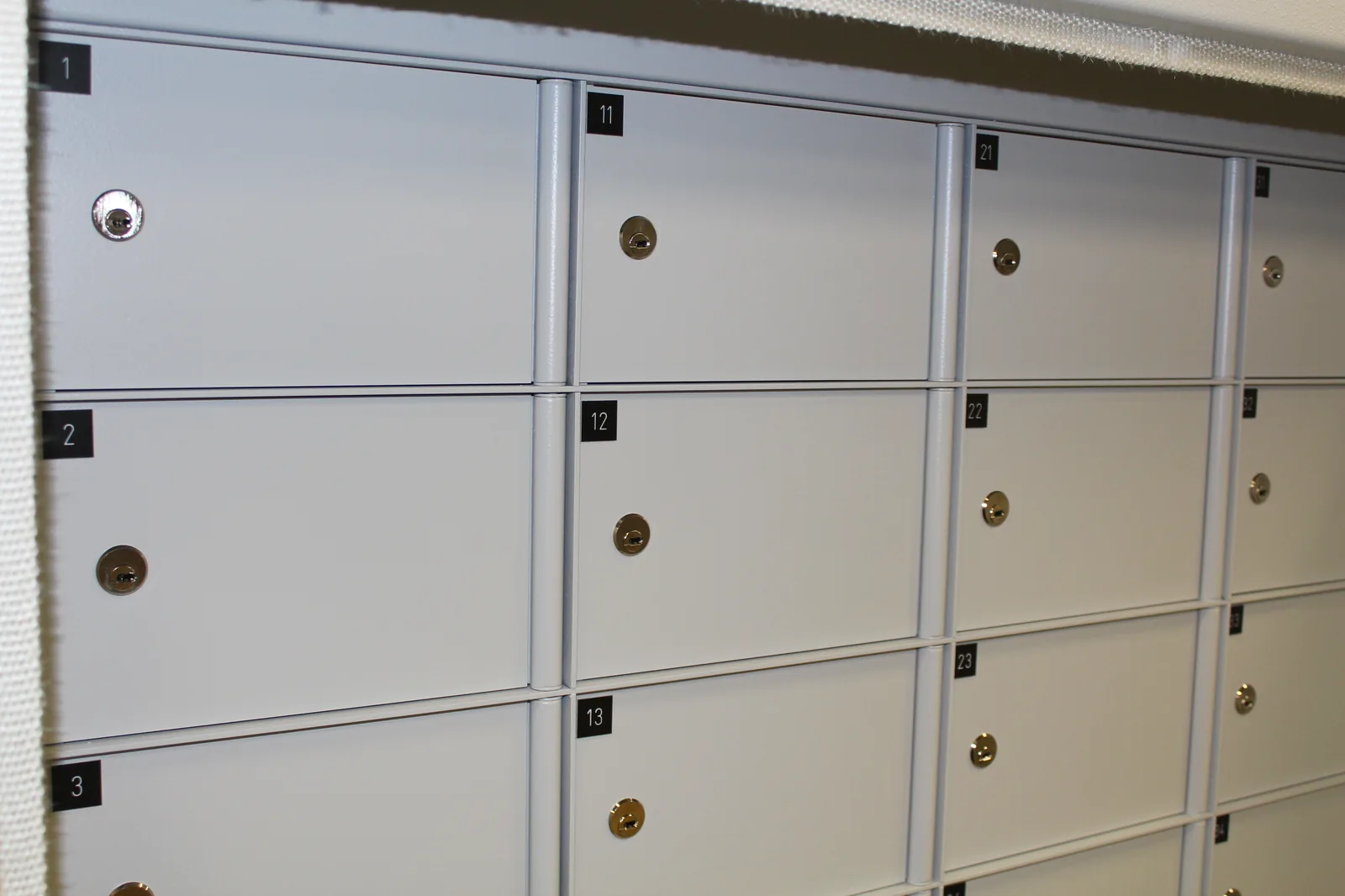
Numbered compartments with one lock each, behind the door of an armoured cabinet.
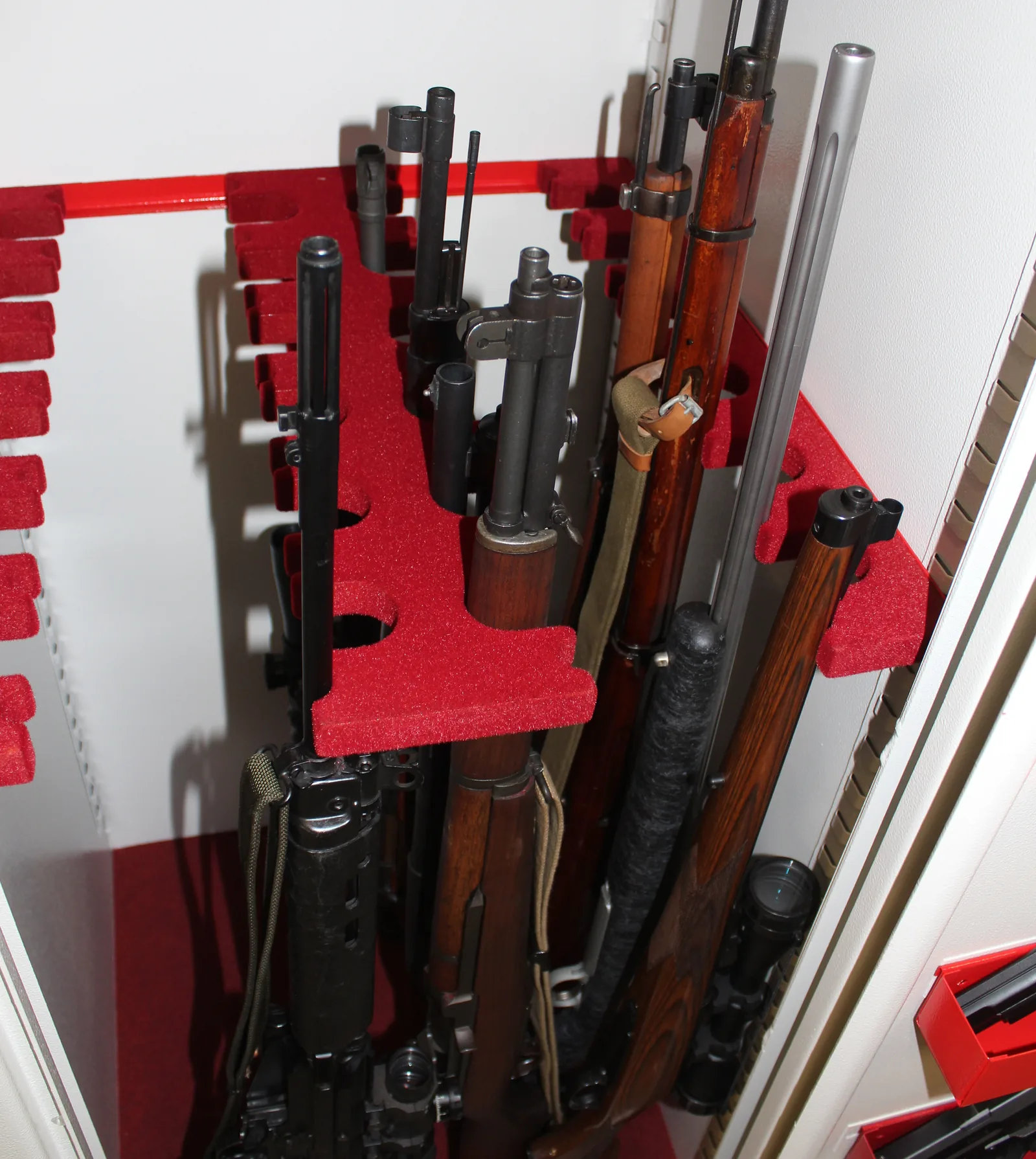
Lined rack for long weapons, with separate compartments for magazines and accessories.
For whom
Police, customs and defence
Personal service weapons and collective weapons, together with vehicle keys, radios and bodycams.
Read moreJustice and prisons
Access per role and team, with every use logged.
Read moreGovernment and local authorities
Weapons and service equipment for every service with armed staff.
Read moreFrequently asked questions
Can personal and collective weapons be managed together?
Yes. A personal weapon is assigned to one officer, a collective weapon to a group or service, within the same cabinet.
Does the weapon cabinet see whether the service weapon was really returned?
With a locked holder, yes. In a closed compartment, a weighing tray flags an empty compartment or an unexpected weight; optional RFID recognition reads the tag of the registered weapon.
Can we keep our existing safe or armoury?
Often, yes. We check whether the modules fit and how mounting, cabling and operation can be carried out.
Does the system work without internet?
Yes. Identification, rights and logging are processed locally. Only web management and synchronisation between cabinets need a network connection.
What happens during a power cut?
A backup battery temporarily takes over. The emergency release is matched to the chosen holders, compartments and safe; your service decides who may use it.
Further reading: Gun cabinet or weapon safe for service weapons · Local or online management
See how the system works
During a demonstration we show identification, release and logging, also combined with keys and lockers.